In this story
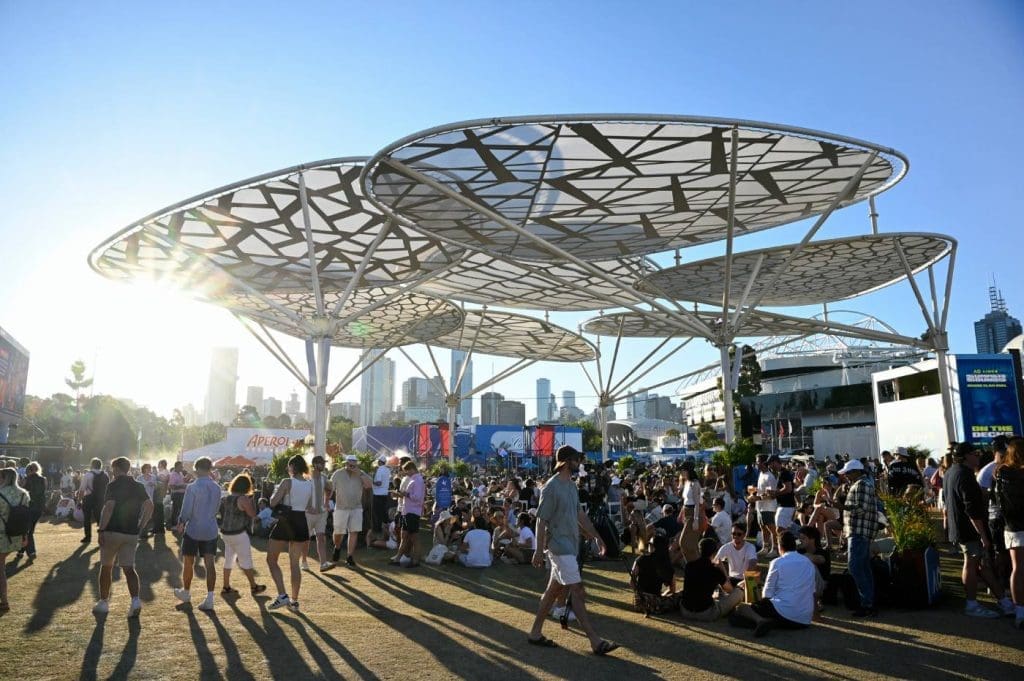
Every January, Melbourne Park transforms into something that feels larger than tennis. The courts are there, the champions are there, and the unmistakable heat of an Australian summer is very much there, but so is one of the most watched social scenes in the sporting calendar. The Australian Open draws more than 1.3 million fans across its three-week programme, a crowd that spans die-hard tennis faithful in their team colours, first-time visitors from across the globe, and a style-conscious set who treat the event with the same wardrobe seriousness as the Spring Racing Carnival or a Formula One grand prix.
Melbourne in late January can hit 40 degrees by lunchtime, drop to 15 degrees after dark, and deliver a storm somewhere in between, sometimes on the same day. Dressing for the AO is therefore a genuine exercise in planning: you are choosing outfits for the heat, the distance you will cover on foot, the courtside seat you have secured, and the atmosphere of an event that millions will be watching. Whether you are arriving for a day session under a blazing sky or a night session at Rod Laver Arena, this guide covers everything you need to know about how to dress for the occasion.
What Is the Australian Open Dress Code?
The good news for anyone who has attended Wimbledon and spent weeks sourcing something acceptably restrained: the Australian Open has no colour restrictions. There is no all-white policy, no prescribed palette, and no requirement to dress formally. The AO is proudly the ‘Happy Slam,’ and that spirit extends to the stands.
The formal rules are lighter than most guides suggest. For general admission, the official conditions of entry ask only that you observe a standard of dress suitable to the area of the AO you are in. The itemised dress code, no thongs (flip-flops), no singlets, no sports shorts, and no ripped jeans or ripped clothing of any kind, is the official smart casual standard for the AO’s hospitality spaces, AO Reserve and premium experiences, per Tennis Australia’s hospitality conditions. If your ticket includes a suite, function or premium dining, treat that list as binding. The standard these rules point toward is smart casual: polished enough to feel appropriate in a premium venue, relaxed enough to survive six hours in 30-degree heat.
In practice, the grounds accommodate everything from tailored linen sets to tennis-core matching outfits without issue, and dressing to the smart casual standard is a safe default wherever you are sitting. Hospitality suites, corporate boxes, and AO Reserve areas carry a formal expectation of a smarter standard, closer to Melbourne Cup corporate marquee than a day on the outer courts.
Bag Restrictions: What You Need to Know
The AO bag policy is one of the most searched questions before the tournament, and for good reason: the rules are stricter than many first-time visitors expect. Under the official conditions of entry, only one bag per person is permitted, and that bag must be small enough to fit under a seat inside the arenas. Large totes, backpacks, and oversized crossbody styles will create problems at the gate. A compact tote, small structured bag, or slim crossbody that fits comfortably under a stadium seat is the practical choice. Keep this in mind when planning your outfit: the bag is not just a fashion decision.
What to Wear to the Australian Open: Day Sessions
The day session is where most visitors will spend most of their time at Melbourne Park. Gates typically open at 10am, the outer courts fill quickly, and the temperature climbs steadily through the afternoon. Melbourne’s January average maximum sits around 27 degrees, but spikes above 40 degrees are not uncommon, and the AO Heat Stress Scale, which can suspend outdoor play and trigger roof closures at the three main arenas, can be activated on any given day.
The single most crucial factor in dressing for a day session is fabric. Linen, lightweight cotton, and moisture-wicking blends manage the heat far better than denim or synthetic fabrics. Outside the three main covered arenas, shade is limited, which means sun protection is not optional: it is part of the outfit.
Women
- Sundresses, polo dresses, and midi-length styles in lightweight fabrics work across the full range of courts and settings.
- Tennis skirts paired with a fitted top are a natural fit for the event and very much on theme.
- Linen or tailored shorts with a relaxed blouse or light knit offer a practical alternative for those covering more ground.
- Bright whites and bold, saturated colours are entirely at home here: the AO crowd embraces colour far more than Wimbledon.
- Wide-brim hats and quality sunglasses are as functional as they are stylish. A cap or raffia-style hat provides protection without sacrificing the look.
- Flat white sneakers or leather sandals are ideal. Heels of any kind are a mistake: the walking distance between courts, food precincts, and facilities across Melbourne Park is significant.
Men
- Polo shirts in lightweight pique or linen-blend fabrics keep the look smart without overheating.
- Linen shirts, either tucked or untucked depending on the setting, work across both outer courts and reserved seating.
- Tailored shorts or chinos are the day session staple for men. Avoid sports shorts, which are prohibited in hospitality and premium areas and sit below the smart casual standard elsewhere.
- A lightweight blazer is optional for those in hospitality or reserved seating areas, but not necessary for general grounds access.
- Clean white sneakers, leather loafers, or flat casual shoes are the footwear sweet spot. Sandals are fine, but leave the thongs at home: they are barred from hospitality and premium areas and a long day on your feet will punish them anyway.
What to Wear to the Australian Open: Evening Sessions
The evening session at the Australian Open is a different experience entirely. Rod Laver Arena under lights, often hosting the later rounds of the main draw, carries a distinct atmosphere: louder, more theatrical, and noticeably cooler as Melbourne’s summer nights roll in. Even during a heatwave, temperatures after 8pm can drop to 15 or 18 degrees, and the shift is more abrupt than many visitors anticipate.
The practical advice for evening sessions is straightforward: bring a layer. A lightweight blazer, linen jacket, or structured wrap over a day dress will keep you comfortable from the late afternoon warmth through to a late finish without requiring a full outfit change.
The style register also shifts slightly in the evening. Rod Laver Arena has a sense of occasion, and the crowd tends to dress accordingly. Nothing formal is required, but the gap between day-session casual and evening polish is worth acknowledging.
Women
- A midi or maxi dress is a strong evening choice: elegant enough for the setting, practical for the temperature shift when paired with a wrap or light jacket.
- Tailored trousers with a silk or woven blouse work well and are easy to dress up or down depending on the seating category.
- Footwear remains flat and comfortable: by the time the evening session begins, many visitors will have already covered several kilometres on foot across the precinct.
Men
- Linen trousers or chinos with a collared shirt strike the right note for an evening at Rod Laver Arena.
- Shorts are technically acceptable but lean toward the smarter end if wearing them to an evening session: a well-fitted pair with a collared shirt works better than a casual equivalent.
- A lightweight blazer or unstructured jacket adds versatility across the temperature range without adding bulk.
Dressing for Hospitality and Corporate Packages
Attending the Australian Open through a hospitality or corporate package is a materially different experience to general admission. AO Reserve, corporate boxes, and premium courtside suites involve table service, pre-match functions, canapés, and dining: the full repertoire of a high-end event. The dress standard in these areas is formal rather than unwritten, smart casual with thongs, singlets, sports shorts and ripped clothing expressly prohibited under the hospitality conditions of entry, and in spirit it sits closer to a smart Melbourne event than a day out at a sports venue.
Think of the standard as the corporate marquee at Melbourne Cup rather than the general grounds. The weather demands you still dress for the heat, but the occasion calls for outfits that are considered, polished, and appropriate for the company of other guests in a premium setting.
Women
- Tailored dresses in structured fabrics, linen, cotton-silk blends, or ponte, work across both the indoor and outdoor components of a hospitality day.
- Smart jumpsuits are a practical and increasingly popular choice: effortless in the heat but polished enough for a corporate environment.
- Elevated separates, a tailored wide-leg trouser with a silk blouse, for example, allow for more flexibility when the temperature changes.
- Heels remain impractical regardless of the ticket category. Block-heeled mules or smart flat sandals navigate the compromise between formal and functional.
Men
- A collared shirt with chinos or dress trousers is the baseline for any hospitality setting.
- A blazer is appropriate and expected in many corporate box environments, particularly for the pre-match period and any formal dining component.
- Smart loafers or leather-look trainers are well-suited to the hospitality context without the impracticality of formal dress shoes on outdoor surfaces.
The best seat in the house deserves the best version of your wardrobe, and arriving dressed for the occasion is the first step in making the day feel as significant as it is.
What to Bring to the Australian Open
Beyond the outfit, there are a handful of practical items that determine how comfortable a full day at Melbourne Park will be. The bag size restriction applies to everything you carry in, so packing with discipline matters.
| Item | Notes |
|---|---|
| Small bag (fits under seat) | Required: one bag per person maximum. A compact tote or slim crossbody is ideal. |
| Hat and sunglasses | Shade outside the main arenas is limited. A wide-brim hat is practical, not optional. |
| Sunscreen (apply before entry) | Sunscreen stations are available on-site, but applying before you arrive saves time and queuing. |
| Refillable water bottle (plastic or metal, under 1.5 litres, no glass) | Water refill stations are located throughout Melbourne Park. Carry an empty bottle and fill on arrival. |
| A light layer | Even on the hottest days, an evening session or late finish will be cooler than you expect. |
| Portable phone charger | A full day of photos and video will drain a battery well before close of play. |
| Card or digital payment | The AO is fully cashless. Card or digital payment only, everywhere on the grounds, so set up your payment method before you arrive. |
What Not to Bring
- Umbrellas cannot be opened in spectator areas during play.
- Alcohol purchased outside Melbourne Park cannot be brought into the venue.
- Large bags or items that cannot fit under a seat: these will not be admitted.
- Professional video cameras and camera lenses with a focal length greater than 200mm are not permitted without accreditation.
Australian Open Fashion: What the Crowd Actually Wears
The AO has become one of the signature fashion moments on the Australian sporting calendar, a status it shares with the Spring Racing Carnival and, increasingly, the Formula One. The crowd at Melbourne Park covers an enormous style spectrum, from tennis-core purists in whites and visors to fashion-forward outfits that would not look out of place at a marquee event.
Tennis-themed dressing is genuinely celebrated here in a way that would feel contrived at most other Grand Slams. Pleated skirts, polo shirts in bold colours, matching co-ord sets, cable-knit sweaters worn over the shoulders: all of it lands within the spirit of the event rather than against it. The AO palette tends toward crisp whites, the distinctive Melbourne Park blue that mirrors the court colour, bold pastels, and strong accent tones.
Outside the main show courts, the grounds are more relaxed in their energy. A Ground Pass covers all the outer courts, the food and entertainment precincts, Garden Square, TOPCOURT and Grand Slam Oval, and the general atmosphere of Melbourne Park and the crowd out here reflects that freedom. There is no single look, and no hierarchy of style. The rule is simple: dress for the area you are sitting in and wear what makes the day feel like an occasion.
Courtside seats at Rod Laver Arena are where the more considered looks tend to congregate, particularly in the later rounds and finals. The visibility is higher, the crowd more condensed, and the atmosphere more formal by association. If your seats are at this end of the spectrum, it is worth reflecting that in how you dress.
The annual fashion conversation around the AO now runs parallel to the tennis itself, driven in part by the prominence of players’ partners in the stands, the courtside celebrity attendance, and the broader shift toward treating sports attendance as a style event. Whether you arrive with a carefully curated outfit or a practical summer staple, the AO is a venue that rewards effort and notices it.
Experience the Australian Open in Style
The Australian Open is as much about being there as watching the tennis. It is the Melbourne summer social scene, the Rod Laver Arena under lights on a final’s night, the outdoor courts where emerging talent plays within metres of you, and the sense of being part of one of the most significant sporting events on the calendar.
Premium seating and hospitality packages change the experience entirely. The distance between a Ground Pass and a reserved courtside seat at Rod Laver Arena is not just physical, it is the difference between watching from the outside and being genuinely inside the event. A Keith Prowse Travel package takes care of tickets and accommodation, and, depending on the package, hospitality functions and transfers, leaving the outfit as the only decision still to make.
Explore Keith Prowse Travel’s Australian Open 2027 packages and secure your place at the Happy Slam.